


Paul Ries & Sons Ethiopia: heritage site for a mobility portfolio
Design and development of paulriesethiopia.com: a brand site that organises passenger, commercial, aftersales and EV-ready verticals around a 160-year Ethiopian trading heritage.

- Automotive
- Mobility
- Brand
- Enterprise
- Heritage line
- Since 1865
- Automotive since
- 1965
- Brand portfolio
- 5 marques
Paul Ries & Sons needed a public site that could carry two truths at once: one of East Africa’s longest trading lineages, and a current mobility business spanning passenger cars, commercial vehicles, aftersales, fleets and EV-ready services.
The challenge
The company sits at an unusual intersection:
- Heritage weight: commercial roots from 1865, automotive presence since 1965, founding-member status in Ethiopian coffee export history
- Several live verticals: passenger vehicles, commercial and fleet, genuine parts and workshops, and a forward path into EV and new-energy readiness
- A brand portfolio that keeps expanding: KIA, ROX, Dongfeng, TATA, SITRAK, each with a different buyer and job-to-be-done
The old site pattern (and most automotive distributor sites) either buried the brands under corporate history, or treated history as a footer footnote. Buyers arriving for a pickup, a fleet programme, or an EV conversation needed a clearer path, without discarding the story that makes Paul Ries credible in the first place.
What we built
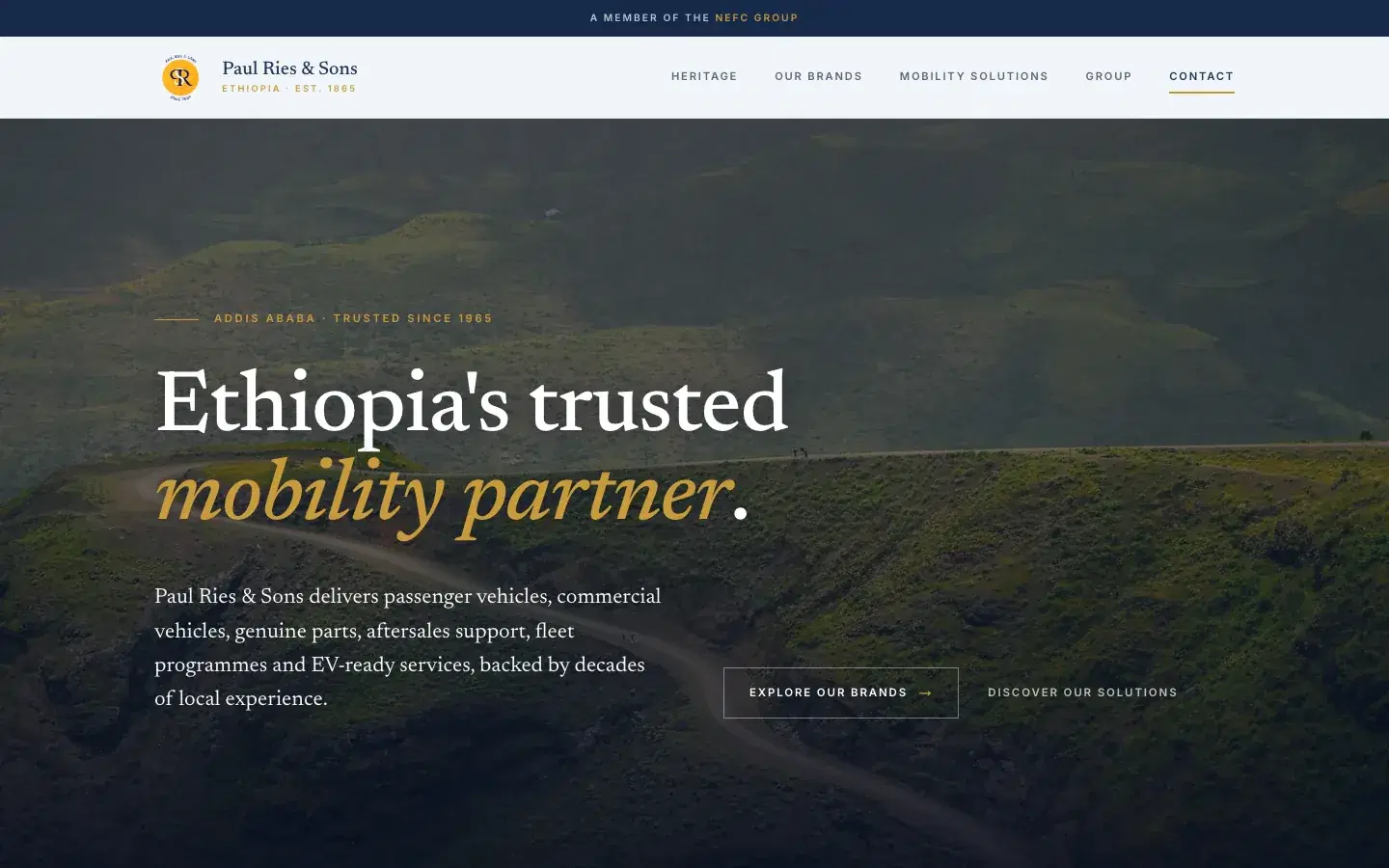
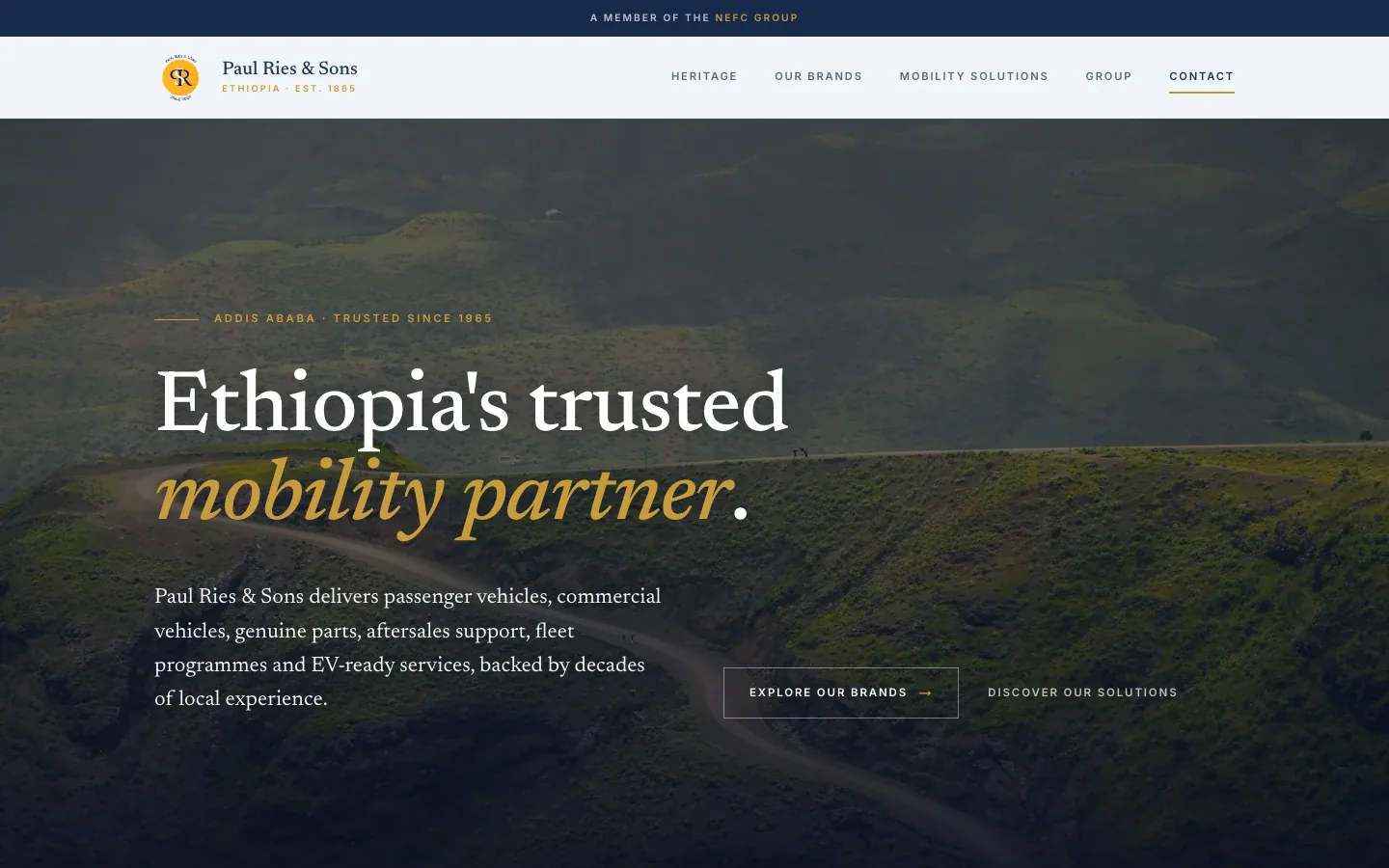
1) A hero that states the job: mobility partner
The first viewport leads with place and posture (Addis Ababa, trusted since 1965), then the line Ethiopia’s trusted mobility partner. Supporting copy names the verticals in one breath: passenger vehicles, commercial vehicles, genuine parts, aftersales, fleet programmes and EV-ready services.
That framing does commercial work: it tells a family buyer, a logistics operator and a group-level stakeholder they are in the right place, before any brand logo appears.
2) Heritage as proof, not nostalgia
A timeline section walks 1865 → first automotive brands → five decades of automotive experience → today’s portfolio. The point is confidence: staying power, standards and relationships that hold. History is sequenced so it explains why the forward mobility story is believable.
3) Business verticals as the product architecture
The site is organised around how the company actually sells and supports:
- Passenger vehicles: families and professionals, manufacturer-standard service
- Commercial and fleet: logistics, construction, agriculture, trade; guidance through SLAs
- Aftersales and genuine parts: workshops, technicians, distribution across Ethiopia
- EV and new-energy readiness: EV-ready workshops and turnkey AC/DC charging
Brand modules (KIA, ROX, Dongfeng, TATA, SITRAK) sit inside that architecture so marques reinforce verticals instead of competing with them.
4) Forward mobility without abandoning ICE reality
“Greener mobility” and EV readiness are treated as a practical operating commitment (workshops and charging), not a slogan layered on top of a 19th-century trading house. The NEFC Group relationship closes the story: regional strength, grounded in Ethiopia.
Outcome
paulriesethiopia.com now does three jobs in one pass:
- Positions Paul Ries as Ethiopia’s mobility partner, not only a historic trading name
- Structures the commercial offer into clear verticals buyers can recognise
- Uses heritage as evidence for the next decade of fleet, aftersales and new-energy work
Commercial takeaway: for multi-brand distributors with real history, the site should lead with the job buyers hire you for (mobility), route them through the verticals that make money, and let heritage do the trust work, not the other way around.
More work
All work
Syntheve
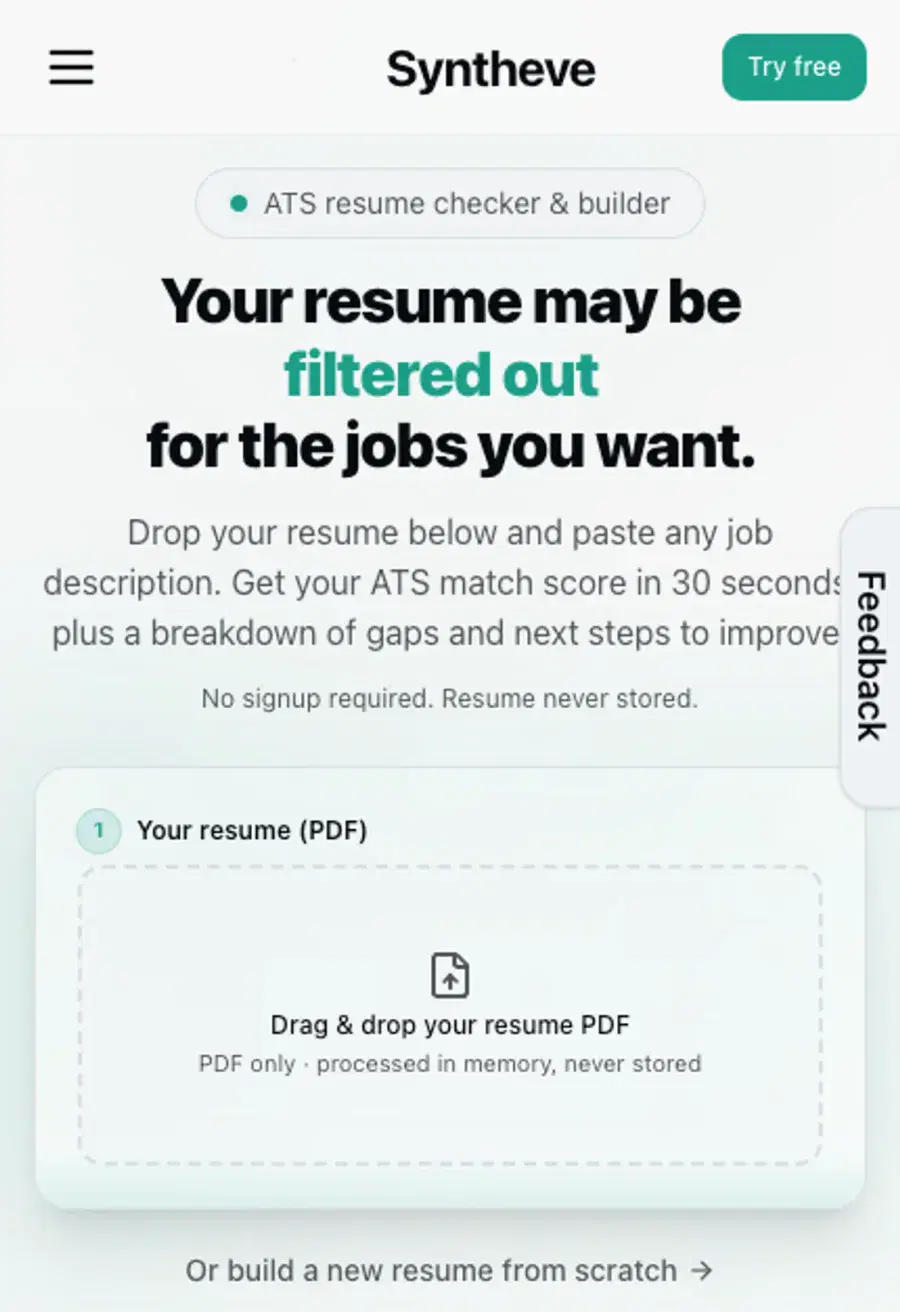
Syntheve: ATS Resume Checker & Builder
Built an ATS resume checker + builder workflow that diagnoses why resumes get filtered out, then helps users fix issues fast.
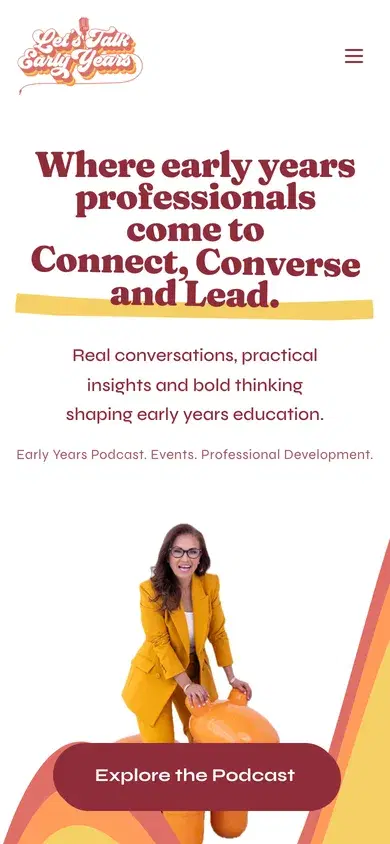
Let's Talk Early Years
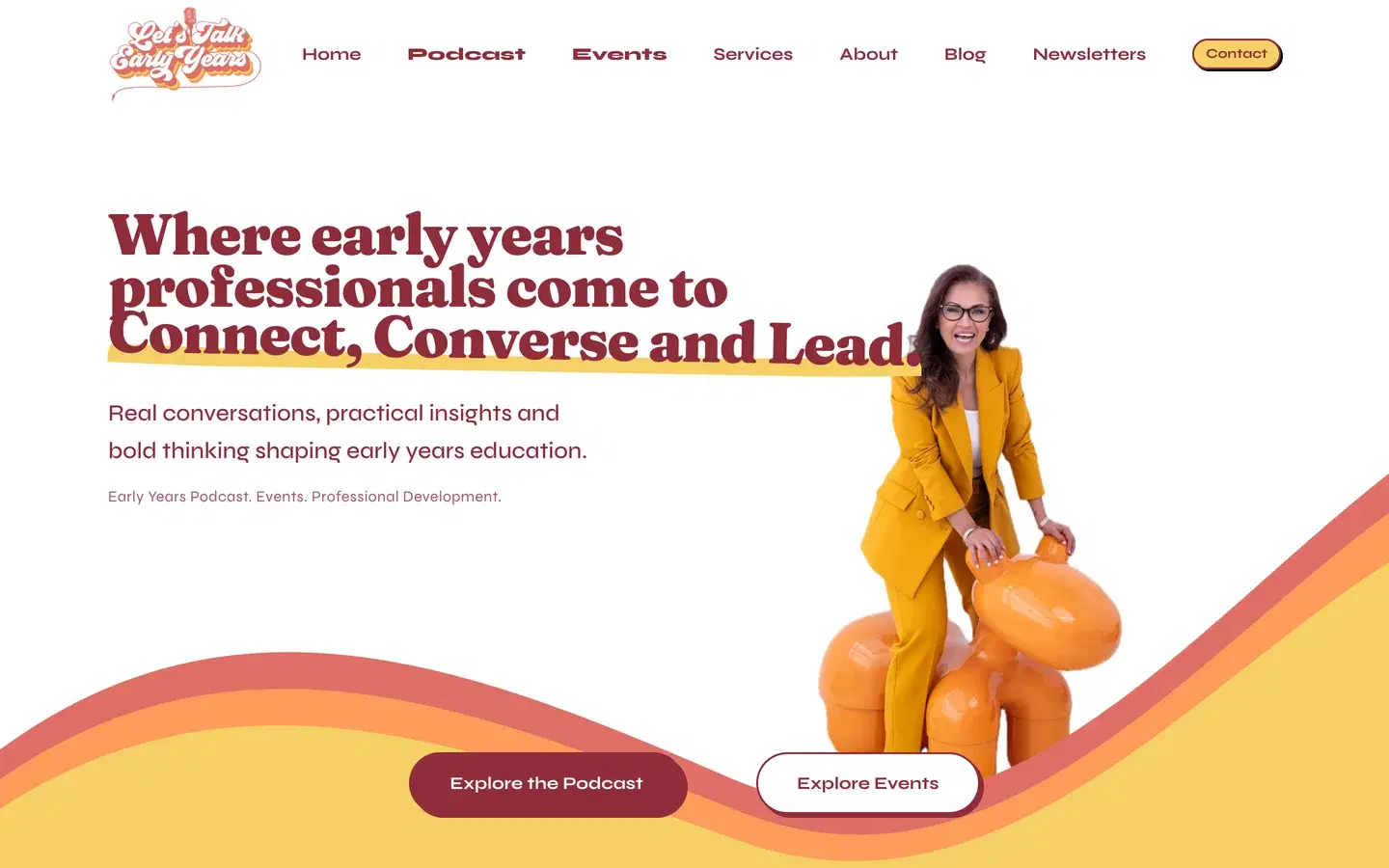
Let's Talk Early Years: podcast, events, and tickets in one place
A live platform for Melonie Karriem's early years community: episodes, events and writing from Contentful, a YouTube podcast, and Stripe event tickets.
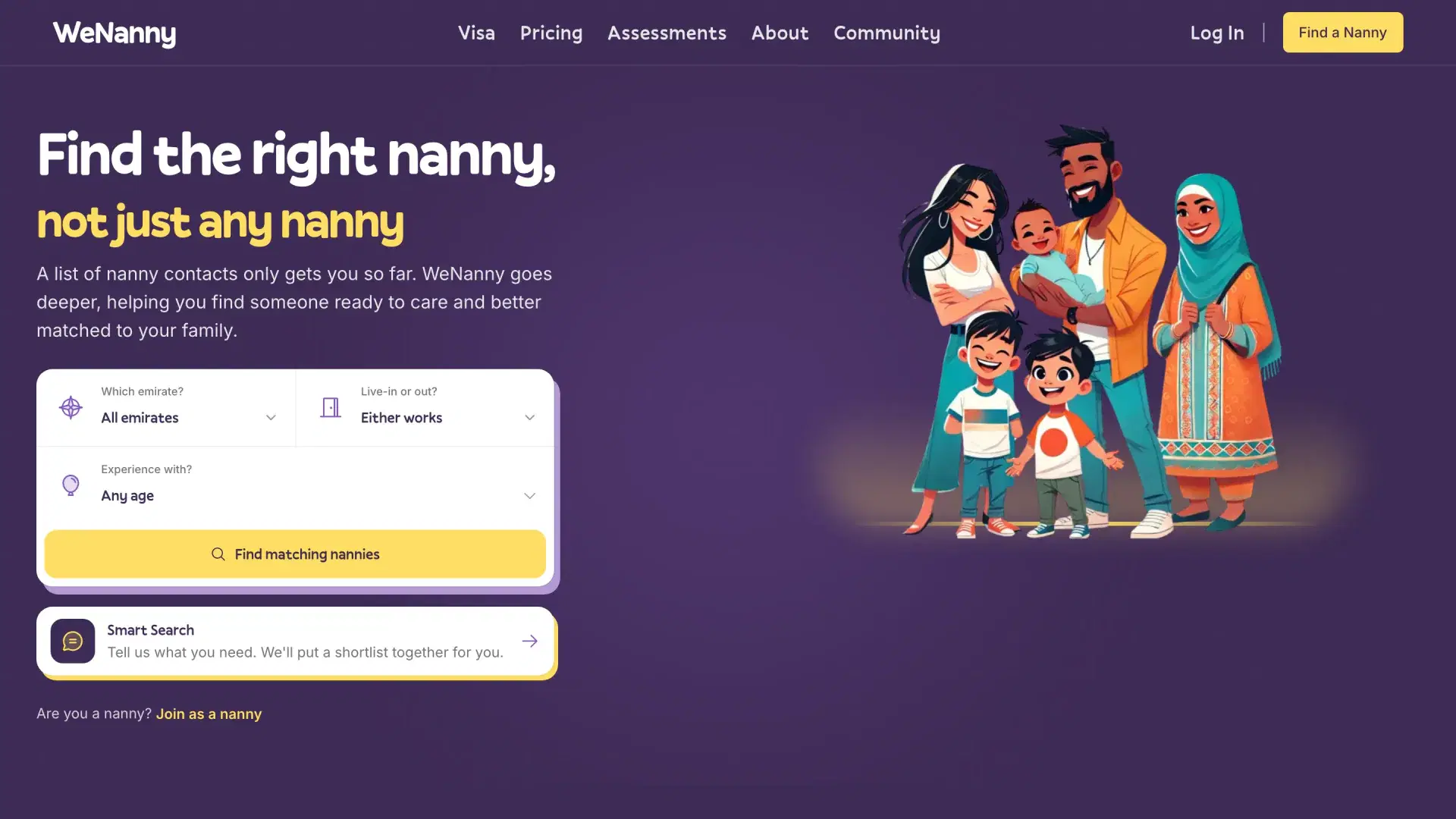
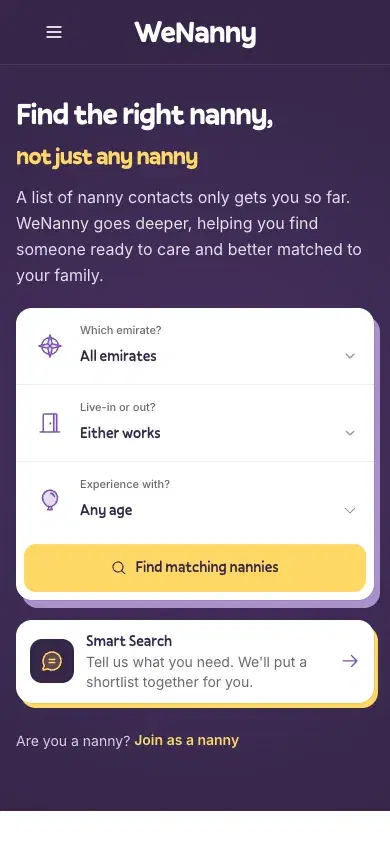
WeNanny
WeNanny: care marketplace with explainable matching
A live UAE marketplace that matches families with nannies on real compatibility: structured profiles, ranking, and clear rationale instead of endless scroll.
What’s taking too much time?
Tell us where things get stuck. We’ll say whether a build, an automation or a training session makes sense.
Talk to us